Starting fresh in a completely new house is like getting a new lease on life. Brand new paint. Spotless surfaces. No signs of wear and tear.
But let’s face facts: a new house is not necessarily a pest-free zone.
In fact, new homes can sometimes be more attractive to pests. Here’s why:
- Construction disrupts the soil, not only leaving it vulnerable to pests, but awaking those pests around
- Construction debris, such as wood scraps, left in the area can attract several kinds of pests
- Changes in moisture levels and landscaping provide a welcoming environment for pests
- Gaps and unfinished seals provide entry points for pests
All these factors can attract pests even before you move in.
Let’s debunk some common myths and see what really happens in new homes.
Common Pest Problems in a New Home
Most homebuyers are surprised to learn that pest problems can emerge shortly after moving into a new home.
Why New Homes Attract Pests
Construction activities provide the perfect breeding ground for pests:
- Soil is turned over during grading and foundation construction
- Construction debris, such as wood scraps, is left in the area
- Landscaping changes provide a new source of moisture and vegetation
- Gaps and unfinished seals around doors and windows provide entry points
All these factors can attract pests even before you move in.
Common Early Issues
Among the most common pest-related issues in newly constructed homes are:
- Pests that were trapped inside during the construction phase and begin to emerge once the home is closed
- Termites that are attracted to buried wood or scrap lumber near the foundation of the home
- Rodents and insects that gain entry through gaps around utility lines
- Moisture-loving pests that are attracted to damp soil and new irrigation systems
A clean interior does not necessarily mean that pest-related risks are not present.
Why New Construction Homes Are Not Immune to Pests
It is often assumed new homes are pest-proof. However, this is not the case. New homes are not necessarily safer from pests.
Entry Points Are Common
During the construction phase, small gaps are often left around:
- Pipes
- Utility lines
- Expansion joints
- Window and door frames
Even small gaps can provide entry points for ants, cockroaches, and rodents.
Soil Disturbance Drives Pest Movement
During construction, underground habitats are disturbed. Ant colonies, termites, and other soil-dwelling pests may be forced to move to a new location, often to the nearest stable structure – which could be your new home.
Building Materials Provide Shelter
Lumber, insulation, cardboard, and wrapping paper can provide temporary nesting sites during the construction phase.
Pre-Treatments Aren’t Permanent
Even if a pre-construction termite treatment has been done, changes in moisture levels, soil settlement, and landscaping modifications may impact long-term protection.
The Impact of New Construction on Pest Activity
Pest activity can start before the house is finished.
Environmental Changes
Pest behaviors and their habitats are altered by new construction:
- Soil compaction alters drainage patterns
- Irrigation systems introduce more moisture
- New vegetation supports insect life
- Outdoor lighting attracts flying insects
These conditions can contribute to increased pest activity around the structure.
Hidden Nesting During Construction
Open construction, exposed voids, and temporary openings can provide entry points for:
- Rodents
- Birds
- Bats
- Insects
Once closed, these pests can remain hidden in walls, attics, and soffits.
Common Pests Found in Newly Built Homes
New homes are often subject to a combination of “construction pests” and common household pests.
Termites
Attracted to buried cellulose materials and moist soil near foundations.
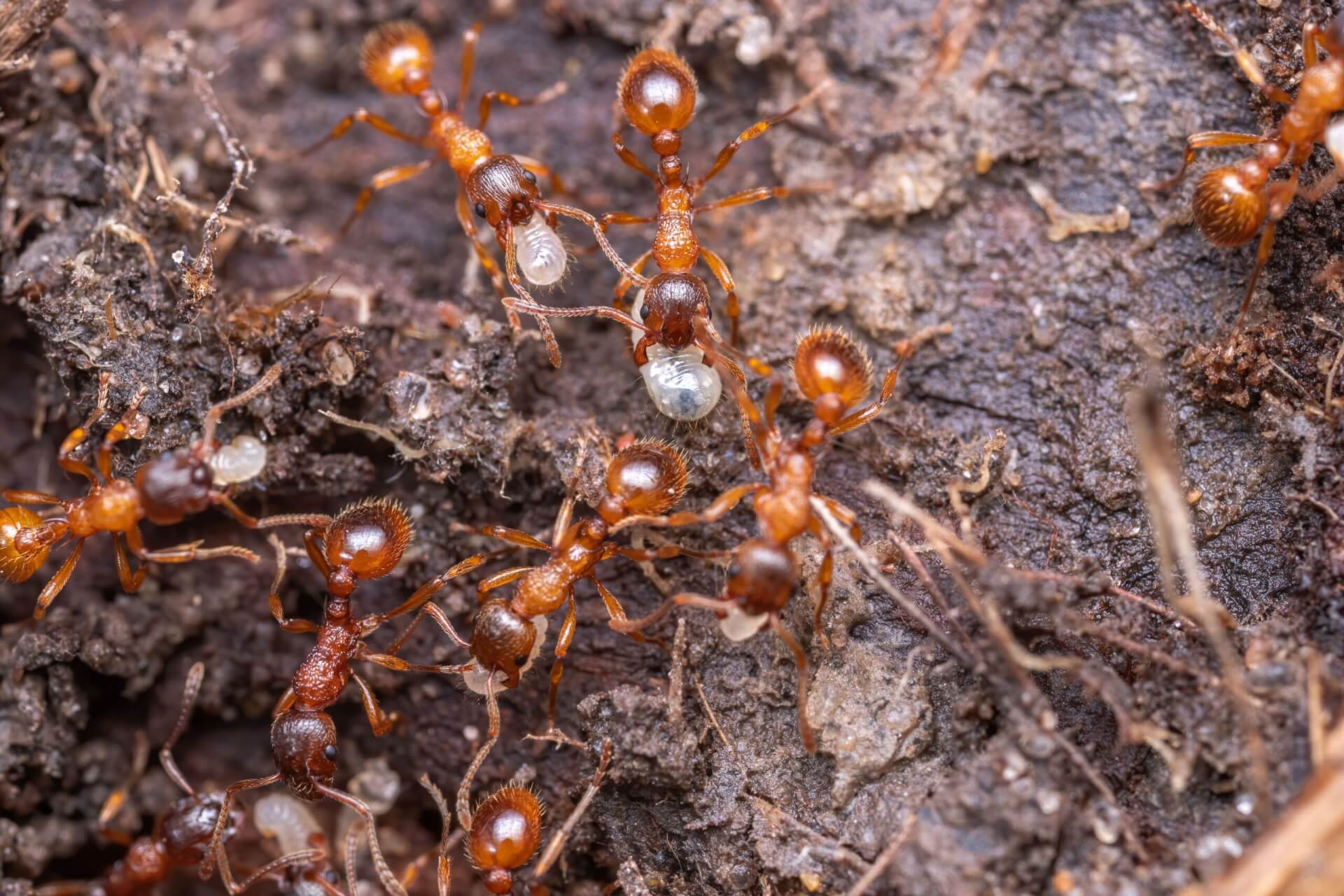
Ants
Typically enter through slab cracks or utility entries. Some species are well adapted to disturbed soil and new landscaping.
Cockroaches
May be hidden in cardboard and construction materials or become trapped inside during finishing phases.
Rodents (Mice and Rats)
Use insulation and wall voids for nesting and can chew wiring and sheetrock.
Spiders and Crickets
Attracted to new lighting and landscaping or trapped inside during construction.
Fleas and Ticks
Present if wildlife or stray animals inhabited the land before construction.
Myth vs. Reality: What Homebuyers Often Get Wrong
Myth 1: “New homes can’t have pests.”
Reality: Pests are attracted to food, water, and shelter – not the age of the home.
Myth 2: “A clean, empty home won’t attract pests.”
Reality: Termites are attracted to structural damage and moisture, not crumbs.
Myth 3: “Pre-construction termite treatment means I’m covered forever.”
Reality: Pre-construction treatments lower risk but you’ll still require ongoing monitoring and maintenance.
Myth 4: “Pests are only a problem in older neighborhoods.”
Reality: Development patterns often lead to increased pest migration due to habitat disruption no matter the age of the neighborhood.
Myth 5: “DIY products will handle any issue.”
Reality: Over-the-counter solutions can help with visible pests but often leave undetected nests, colonies, and structural damage untouched. DIY methods can even make infestations worse by forcing pests further into hiding, making them harder to reach and treat for.
Early Warning Signs of Pest Activity in New Homes
Early detection is key to protecting your investment and your sanity.
Watch Out For:
- Sawdust-like material, mud tubes, hollow-sounding wood (termite infestation)
- Droppings, scratching sounds, or gnaw marks (rodents)
- Live or dead cockroaches in areas around drains or stored food
- Ant trails along the foundation or in kitchens
- Dense spider webs or regular insect sightings in specific spots
Recording observations of pest activity can assist experts in recognizing patterns.
Preventive Pest Control Steps New Homeowners Should Take
Prevention is most effective when begun immediately.
Seal Entry Points
- Caulk around windows and doors
- Seal utility entry points
- Install adequate weatherstripping
Manage Moisture
- Repair leaks promptly
- Keep gutters clean
- Ensure correct grading to direct water away from the foundation
- Avoid excessive watering of landscaping
Remove Construction Debris
Remove scrap wood, cardboard, and other construction materials from garages and outdoor spaces.
Store Wood and Mulch Properly
Keep firewood and heavy mulch plantings well away from the foundation.
Maintain Cleanliness
Store food in tightly sealed containers and dispose of trash properly.
Schedule Inspections
Regular inspections in the early years of home ownership can reveal hidden problems behind walls or beneath slabs. And routine service can keep you safe all year round.
How to Choose a Professional Pest Control Company
Selecting the proper service ensures your new dwelling is protected throughout the settling process and environmental adjustments.
Look For:
Proper Licensing and Insurance
Make sure the company you are choosing is licensed in your state and familiar with new construction homes.
Thorough Inspection Process
A professional company will inspect both inside and out and provide written recommendations.
Integrated Pest Management (IPM)
IPM emphasizes inspection, monitoring, and strategic treatments – not just regular spraying.
Ongoing Service Options
Seasonal and structural changes may impact pest activity. Regular check-ups will keep you one step ahead.
Transparency
Open communication regarding products, safety, and homeowner responsibilities is vital.
The Bottom Line on “Pest-Free” New Builds
A new home provides many benefits. Pest-free living is not one of them. New construction does not guarantee a pest-free zone, it merely shifts the pest risk source.
Knowledge of common misconceptions, early warning signs, and proactive measures from day one will give you the best opportunity to safeguard your new investment.
FAQs
1. Do I need pest control in a brand-new home?
Yes. New homes can harbor pests introduced during construction or attracted to soil disturbance and moisture.
2. If my builder applied termite treatment, am I fully protected?
Pre-construction treatment is a plus, but it does not substitute for ongoing monitoring and maintenance.
3. Which pests are most common in new builds?
Termites, ants, cockroaches, rodents, spiders, and occasional invaders are commonly noted.
4. When should I schedule a pest inspection after moving in?
Many homeowners find an inspection helpful in the first few months, especially if warning signs are noted.
5. Can cleaning alone keep pests out?
Cleaning helps eliminate food, but it does not substitute for addressing gaps, moisture problems, or soil conditions.