Key Takeaways
- Color and body: Worker termites are pale and creamy white, with straight antennae and no defined waist. Worker carpenter ants are black, with elbowed antennae and a thin, cinched waist.
- Wings: A termite swarmer’s four wings all match in length. A carpenter ant swarmer’s front wings are noticeably longer than its hind wings.
- Visibility: Termites stay out of sight inside wood and mud tubes. Carpenter ants travel in the open and are far easier to spot.
- Wood habits: Termites eat wood from the inside. Carpenter ants carve through it to nest, but they don’t consume it.
- Telltale signs: Mud tubes along a foundation suggest termites. Piles of sawdust-like frass and lines of marching ants suggest carpenter ants.
- Damage: Termites weaken structures, often for years before anyone notices. Carpenter ants damage wood and can contaminate food in homes, restaurants, and warehouses.
- Control: Both pests are hard to manage once they move in. A professional treatment plan is the most dependable solution.
Termites and carpenter ants often get mistaken for each other. This guide explains how to tell them apart by body shape, antennae, wings, color, behavior, and the damage each one leaves behind. You’ll learn what mud tubes, frass, ant trails, and swarmers reveal about the pest in your space. Whether you manage a home, a business, or a commercial building, the experts at Waltham Pest Services can confirm what you’re facing and help you decide what comes next.
A cluster of winged bugs on the windowsill. A small mound of wood shavings under a beam. Moments like these make you stop and wonder what’s living in your walls. That worry is natural, and you’re not alone in it. Termites and carpenter ants trip up plenty of people, but a handful of details make the answer clear.
Quick answer: Look at the antennae, the waist, and the wings. Termites have straight antennae, a thick body with no pinch in the middle, and four wings of matching size. Carpenter ants have elbowed antennae, a narrow waist, and front wings that are longer than the back pair. Termites feed on wood and build mud tubes. Carpenter ants dig through wood without eating it and push out sawdust-like frass.
Why Termites and Carpenter Ants Get Mixed Up
It’s easy to confuse these two insects. Both target wood that’s been softened by moisture, including support beams, window frames, and other structural lumber. Both also release winged swarmers that show up in and around houses, apartment complexes, and commercial buildings.
That’s where the overlap ends. Once you know where to look, their bodies and habits point you in the right direction.
Side-by-Side Comparison
| Trait | Termites | Carpenter Ants |
| Worker color | Pale, creamy white | Black |
| Antennae | Straight | Elbowed or bent |
| Body shape | Cylindrical, thick waist | Three distinct segments, narrow waist |
| Swarmer wings | Four wings, all the same length | Long front wings, shorter hind wings |
| How visible they are | Rarely seen; they hide in wood and mud tubes | Often seen; they forage out in the open |
| Main warning sign | Mud tubes | Ant trails and sawdust-like frass |
| What they do with wood | Eat it | Carve through it without eating it |
| Diet | Cellulose found in wood | Sugary foods like honey, sugar, and fruit |
| Biggest risk | Structural damage | Food contamination and nest damage in wood |
Identifying Termites and Carpenter Ants by Their Appearance
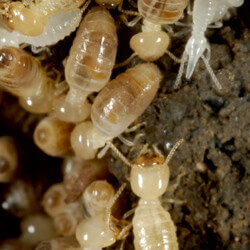
Picture of a worker termite.
What Worker Termites Look Like
Worker termites have no wings. Their bodies are pale and creamy white, and their antennae run straight out from the head. You’ll rarely see one unless you crack open a mud tube. Termites shy away from light and open air, so they spend their lives tucked inside wood or inside the tunnels they build.
What Worker Carpenter Ants Look Like
Carpenter ants are much easier to find. Workers are black, with three clear body segments, a thin waist, and antennae that bend at an angle. They roam out in the open, so you’re far more likely to notice them than termites.
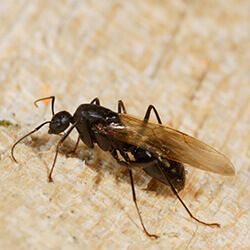
Image of a winged carpenter ant.
How to Tell Winged Swarmers Apart
Swarmers are trickier. Both species produce winged males and females, and both come in dark brown or black. The body and wings hold the answer. Check the waist. Then check the wings. That’s usually all it takes.
- Termite swarmers have a straight, cylindrical body and four wings that are all the same length.
- Carpenter ant swarmers have a clearly pinched waist, a pair of long front wings, and a pair of shorter hind wings.
Signs of a Termite or Carpenter Ant Infestation
The presence of swarmers flying around a home, apartment building, or commercial space is a sign of a problem with either carpenter ants or termites. However, each insect’s behavior is also a clue to its species.
Warning Signs: Termites vs. Carpenter Ants
Winged insects flying inside a home, apartment building, or commercial property mean you likely have one of these two pests. How the insects behave tells you which one.
Signs You May Have Termites
Termites are quiet invaders. Their colonies live underground, and workers stay sealed inside the wood they eat. Keep an eye out for:
- Mud tubes: These narrow, enclosed tunnels run over brick, stone, and concrete so termites can reach fresh lumber. Inspect foundation walls in basements and crawl spaces.
- Indoor swarmers: Winged termites inside your home or business often mean a mature colony is close by.
- Damage you can’t see: Termites hollow out wood from within. A board can look solid on the outside while losing strength inside.
Signs You May Have Carpenter Ants
Carpenter ants follow the same route between their nest and their food again and again. Watch for:
- Ant trails: Steady lines of ants heading into or out of cabinets, pantries, or storerooms.
- Sawdust-like frass: Because carpenter ants don’t eat wood, they push wood shavings and waste out of small openings in the surface. The debris collects in little piles below.
- Indoor swarmers: Winged ants with narrow waists inside your building can signal a nest nearby.
How Termite Damage Differs from Carpenter Ant Damage
What Termites Do to Wood
Termites digest the cellulose in wood and work through lumber from the inside. They can stay hidden for years, and the damage spreads the whole time. Fixing critical structural pieces like support beams or subfloor joists takes time and money. When a business has to shut its doors for repairs, it also loses income while the work gets done.
What Carpenter Ants Do to Your Property
Carpenter ants cause a different kind of trouble. They hollow out wood for nesting space, then go looking for sweets in homes, grocery stores, and warehouses. Along the way, they contaminate honey, sugar, fruit, and other kitchen staples and stored goods. In restaurants and hotels, a single sighting can sour a guest’s visit and lead to negative reviews.
Neither pest is easy to manage once it settles in. You don’t have to handle it alone.
Let Waltham Pest Services Take It from Here
Not knowing what’s inside your walls is unsettling. You deserve a clear answer. Our licensed technicians can tell termites from carpenter ants, trace where the activity starts, and create a plan that fits your property.
Board Certified Entomologists support every technician. Every treatment is built around your home or business, your specific pest pressures, and your circumstances. No cookie-cutter treatments here. Call Waltham first.
Contact Waltham Pest Services today.
Frequently Asked Questions
Q: How do I know whether I have termites or carpenter ants?
A: Start with three features: antennae, waist, and wings. Termites have straight antennae, a thick waist, and four wings of equal length. Carpenter ants have elbowed antennae, a narrow waist, and longer front wings. Mud tubes suggest termites. Piles of sawdust-like frass suggest carpenter ants.
Q: Do carpenter ants eat wood the way termites do?
A: No. Carpenter ants dig tunnels in wood to create nests, but they don’t digest it. They push the shavings out as frass. Termites, on the other hand, eat wood and live on the cellulose inside it.
Q: What are the earliest signs of a termite problem?
A: Early clues include mud tubes along foundation walls, winged termites indoors, and wood that sounds hollow or feels soft. Because termites stay out of sight, many infestations aren’t found until a professional inspection.
Q: Are termites or carpenter ants more destructive?
A: Termites typically do more structural harm. They eat wood from within and can work unnoticed for years. Carpenter ants still damage wood and contaminate food, particularly in homes, restaurants, and stores. Both call for professional treatment.
Q: What does carpenter ant damage look like?
A: You’ll usually see small openings in wood with sawdust-like frass piled underneath. Inside the wood, carpenter ants leave smooth, clean galleries where they’ve nested.
Q: Can I treat termites or carpenter ants myself?
A: Both pests are tough to control once they’re inside. Over-the-counter products seldom reach the colony itself and often just make the problem worse or harder to deal with. A licensed technician can identify the pest correctly and treat the problem at its source.