
We all know what ticks are. Those little black or brown “bugs” with 8 legs that can grab onto you, the kids, the dog – anything with warm blood – and be very difficult to get to let go. And we all know what Lyme disease is. It can be serious if left untreated, and the tick that carries it is certainly in our area. But knowing what they look like and one of the (many) diseases they can transmit are only a few pieces of the tick puzzle. We sat down with our Entomologist, Philip Seymour to discuss ticks, whether you should worry about them, the diseases ticks can transmit, and how to prevent tick bites.
Has It Been a Bad Year for Ticks?
Unfortunately, Philip said tick pressure is high this season and appears to be heavier than normal. Why are ticks consistently so bad? He stated a bunch of reasons why this is the case including:
- A succession of relatively mild and humid winters through which ticks survive
- Ticks expanding their home ranges due to such longer-lasting warm weather
- Development of inhabited buildings in natural areas with woodland aesthetic
- An increased presence of wildlife around peoples’ homes creating more environments where ticks are likely to encounter humans.
It turns out, this should be a big concern for our community. How concerned should you be about ticks in your yard this year? Philip said… very. “Any time someone is near knee or waist-high vegetation, which is shaded and likely to retain moisture, that person is at risk for ticks,” said Philip. “Mown lawns in full sun are not conducive to tick survival but woods edges and unmanaged vegetation on the edges of lawns may be infested with ticks.”
What Kind of Ticks Are in Our Area
According to Philip, there are three main ticks in our area.

Blacklegged ticks (a.k.a. “deer ticks”) have flat, oval bodies, and are not hard-shelled. Female deer ticks are orangish brown in color except for their legs, mouthparts, and backs. Unengorged, their abdomen is a dark reddish-brown color but becomes gray after feeding on a host. Male blacklegged ticks are reddish brown overall. They are the only known vector for Lyme disease, but they can also transmit Rabbit fever.
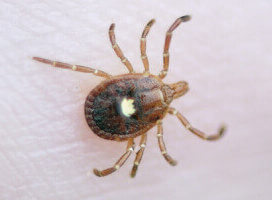
Lone star ticks have reddish brown oval bodies that become slate grey when engorged. Male lone star ticks have several inverted horseshoe-shaped whitish spots along their backs. The lone star tick gets its name from that single silvery-white spot located on the female’s back. They can trigger Alpha-gal syndrome (AGS), transmit Bourbon fever, and Rabbit fever.
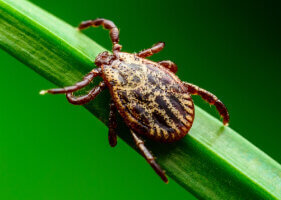
American dog ticks are oval and flattened in shape and are brown with whitish to gray markings. Depending on whether or not they have fed on host blood, American dog ticks can range in size from 5 mm to 15 mm. The American dog tick is a very common tick and the primary vector of Rocky Mountain spotted fever (RMSF), which is caused by the bacterium Rickettsia rickettsia.
What Can Residents Do About Ticks
There are some things residents in this area should keep in mind to help battle this persistent tick threat. Philip said the best things people can do to protect themselves from ticks whenever outdoors in woods, on woodland trails, or near wood lines including:
- Use EPA-approved tick repellent
- Wear light-colored clothing to make ticks more visible during tick checks.
- Inspect yourself, your children, and your pets for ticks on them.
- Check yourself all over but Philip noted to be sure to focus your attention on your hair, neckline, shins, waist, and groin since those are the places where ticks are commonly found after crawling onto a human host.
The inspection is the most important part. Philip noted that, “ticks typically do not bite for many hours after they have crawled onto a host. So, finding and removing them as soon as possible after leaving a high-risk tick area is a best practice, so you can get to them before they bite.” He also said tick control treatments are a must.
What Should People Know About Ticks
Besides the obvious, about the dangerous diseases ticks can transmit, Philip said there are a few things you need to know about lone star ticks including how larval (“seed”) lone star ticks will continue to be active through August. And that while you may think the adults are the main issue, larval ticks are a serious threat because they’re so difficult to see on one’s body. But he also noted all life stages are active throughout the summer and present a risk for attachment and feeding.
He also said that people tend to worry about the blacklegged tick because of Lyme and while that’s definitely a risk around here, the lone star tick is slowly climbing up the ranks of ticks to be worried about. Unfortunately, overall, the number of ticks in general is always relatively high. They thrive in hot, wet, or humid conditions where vegetation is abundant – sounds like our area! Ticks attack numerous types of wildlife and domestic animals as well. Where all of these factors converge there is a high likelihood that ticks are present and will seek out people and animals including our pets.
Philip closed by saying, “All the cruise ship hantavirus talk was gone quickly. You know why? Because its carriers are not as common as disease-carrying ticks. But Lyme disease, Alpha-Gal Syndrome, Rabbit Fever, and Bourbon virus are much easier to get because the ticks associated with them are essentially all around us. All it takes is a walk in the wood – even on a well-maintained trail – for a tick to attach itself to you. I want everyone to take ticks seriously and be careful. And, of course, bring in Waltham Pest Services to provide professional tick treatments around your home.”
Tick FAQs
How do I safely remove a tick?
To safely remove a tick, use fine-tipped tweezers, grasping close to the skin/head, and pulling straight up with steady pressure (no twisting or jerking and try not to crush the body). And beware of old wives’ tales like matches, nail polish, or petroleum jelly. Clean the area afterward, monitor for symptoms, and consider saving the tick for identification.
What are the symptoms of a tick bite?
The symptoms associated with Lyme are fever, chills, fatigue, headache, muscle/joint aches, swollen lymph nodes, itchiness, and especially an expanding red “bull’s-eye” (erythema migrans) rash. If you have any of those symptoms, be sure to contact your doctor.
Are all ticks dangerous?
Yes, all ticks are dangerous. Since all ticks latch onto you, even if they don’t transmit a disease, the area can become infected.
What are the most common tick-borne diseases?
The most common tick-borne diseases are Lyme Disease, Rocky Mountain Spotted Fever, Rabbit Fever, and Bourbon virus (in that order). Alpha-gal syndrome is not a disease, but an allergy to red meat resulting from exposure to contaminants in lone star tick saliva. It is a very serious condition.
How do I know if a tick bit me?
Obviously, the presence of a tick is the most concrete sign of a tick bite. But a bullseye shaped rash indicates a deer tick bite and mostly likely Lyme disease.
What does the bite of a tick look like?
A tick bite can look like a small dark dot or a red lump. Unfortunately, those small things can get overlooked which is why many tick bites are left untreated.
How can I prevent tick bites?
To prevent ticks, using tick repellent is always recommended when going for a hike. You should also wear light colored clothes whenever you can so any tick that crawls onto you will be easily spotted and therefore detected early. Also, having professional tick treatments will help with preventing ticks around your home.